Source Single Use Film Camera for Events, Travel, and Parties
Find 30 single use film camera options with varying features like automatic flash, fixed focus, and multiple color choices. Buyers can compare specifications including size, weight, and battery type to select the right model for personal leisure or professional use.
Key considerations
Products List
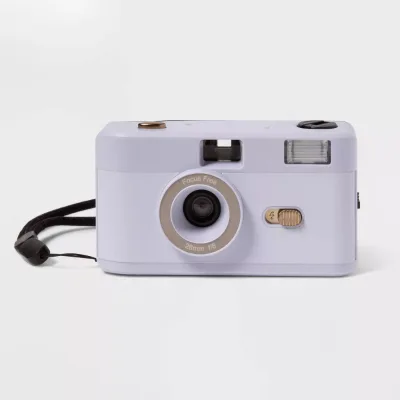
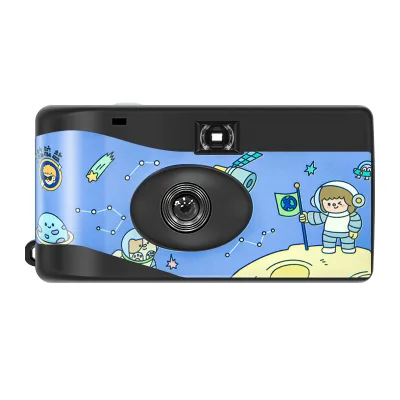
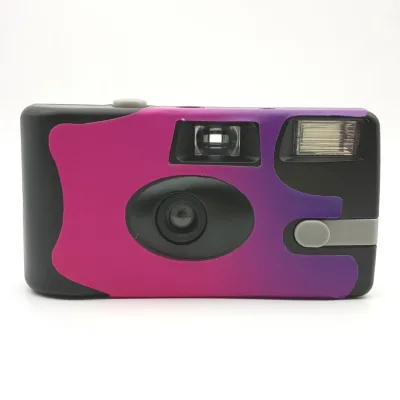
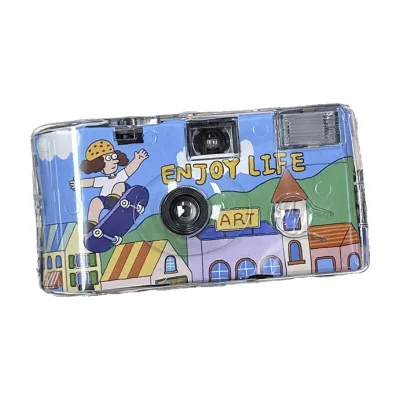






Comprehensive Sourcing Guide
Strategic Sourcing Guide for Single-Use Film Cameras
Understanding Product Variants and Technical Specifications
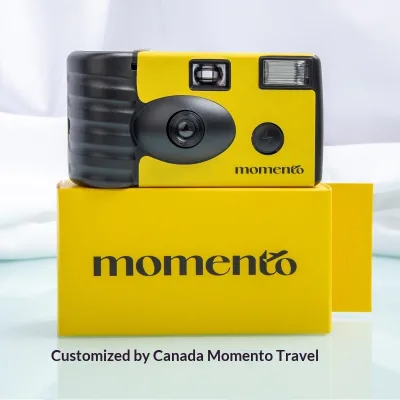
The market for single-use film cameras presents a diverse landscape where "single use" often describes a specific operational mode rather than a singular product definition. Buyers must distinguish between traditional disposable film cameras and reusable film cameras that mimic the aesthetic or function of single-use units. Based on observed product attributes, the category includes devices labeled as "35mm Reusable Film Camera" alongside items explicitly described with the "Single Use Camera" special feature. This distinction is critical for procurement, as the former implies a durable construction intended for multiple film loads, while the latter may denote a device designed for a single roll of film before disposal or recycling.
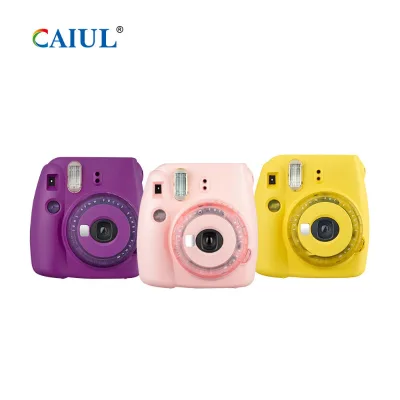
Technical specifications vary significantly across the available inventory. A primary observation involves the optical configuration. Many units in this sector feature a "Fixed Focus" optical zoom, which simplifies the manufacturing process and reduces cost, making them suitable for casual photography. In contrast, some advanced models within the same category incorporate specialized lenses, such as a "New Macro Lens adapter" capable of focusing between 35cm and 50cm, offering versatility for close-up shots. The flash mechanism is another key differentiator; while some units rely on an "Automatic Flash" to ensure exposure in low light, others may lack this feature entirely depending on the specific model number, such as the "Instax Mini 9 Clear Accents" variant which is noted for its specific styling rather than flash capability.
Physical dimensions and weight are essential for logistics planning. Standard units often measure approximately 117mm by 62mm by 34mm, with a net weight of around 102 grams. However, packaging data indicates a single gross weight of 0.5 kg, suggesting that the shipping weight includes substantial protective packaging or accessories. The materials used in construction range from "ABS Plastic" for the main body to "Stainless Steel" or "Alloy" shells in more ruggedized variants. These material choices directly influence the durability and the perceived quality of the device, with "Excellent" quality ratings often associated with the alloy or steel constructions.
Compliance, Certification, and Safety Standards
When sourcing single-use or reusable film cameras, verifying compliance with international safety and environmental standards is paramount. While specific certification numbers are not universally listed in general product descriptions, buyers must demand evidence of compliance for electrical components, particularly regarding battery safety. The observed product attributes frequently mention "AA" or "2 - AA Batteries" as the power source. Procurement teams must ensure that the battery compartments and the camera's electrical circuits meet relevant safety standards to prevent leakage or overheating, especially given the "Automatic Flash" feature which draws significant power.
Environmental compliance is another critical area, particularly for products marketed as "Single Use." The term "Single Use" implies a lifecycle that ends after one roll of film, raising questions about waste management and material recyclability. Buyers should verify if the manufacturer adheres to specific waste electrical and electronic equipment (WEEE) directives or local recycling mandates. Furthermore, for cameras marketed with rugged features such as "Waterproof," "Dustproof," and "Shockproof," the "IP68" waterproof grade is a specific technical claim that requires validation. An IP68 rating indicates a high level of protection against dust and immersion in water, but this must be confirmed through independent testing reports rather than relying solely on the product label.
For products originating from specific regions, such as "Henan, China" or "Other Country," buyers must navigate the import regulations of their destination market. This includes verifying that the "Place of Origin" aligns with the labeling requirements of the target country. Additionally, if the product claims "Professional" features or "Night Vision" capabilities, these assertions must be backed by performance data. Buyers should request test results that confirm the efficacy of these features, as "Night Vision" in a standard film camera context is technically unusual and may refer to specific film sensitivity rather than electronic night vision capabilities.
Cost Drivers and Pricing Dynamics
The pricing structure for single-use film cameras is influenced by several distinct factors, ranging from material costs to customization options. The observed price range spans from $5.11 to $20,000, a vast disparity that reflects the difference between basic disposable units and highly specialized, ruggedized, or customized equipment. The lower end of the spectrum typically corresponds to simple "ABS Plastic" cameras with fixed focus and standard flash capabilities. These units are often sold in high volumes with a Minimum Order Quantity (MOQ) as low as 1 piece, catering to individual buyers or small retailers.
Conversely, the higher price points are driven by advanced specifications and customization. Products featuring "Stainless Steel" or "Alloy" shells, "IP68" waterproofing, and specialized lenses command a premium. The "Private Mold" attribute is a significant cost driver; manufacturers offering custom molds allow buyers to brand the camera uniquely, but this requires a higher initial investment and potentially higher MOQs, which can range up to 2000 pieces. The "Customization: Available" attribute suggests that buyers can request specific color schemes, such as "White, Green," "Blue, Yellow," "Pink," or "Black, Red," which may incur additional tooling or setup fees.
Logistics costs also play a role in the final landed price. The "Single package size" of 10x10x10 cm and a "Single gross weight" of 0.5 kg per unit affect shipping efficiency. Bulk orders that maximize container utilization will reduce the per-unit shipping cost, whereas small orders with high packaging density may result in higher logistics expenses. Buyers should also consider the "Selling Units" configuration; whether the product is sold as a "Single item" or in bulk packs will impact the unit economics.
Typical Applications and Market Segmentation
The application of single-use and reusable film cameras is segmented by user intent and environmental conditions. The "Personal Leisure" usage category is the most common, targeting consumers seeking a nostalgic or analog photography experience. These users often prefer the "Lovely" style and "Multiple Color" options that allow for personal expression. The "Professional" special feature indicates a subset of products designed for specific professional applications, such as industrial inspection or outdoor documentation, where durability is paramount.
Ruggedized cameras with "Waterproof," "Dustproof," and "Shockproof" attributes are specifically suited for extreme environments. The "Applicable Model" data reveals that these cameras are often marketed for use in "Car," "SUV," "Agricultural Vehicles," "Engineering Vehicles," "Forklift," and "Truck" settings. This suggests a niche market where cameras are mounted on vehicles for monitoring, safety recording, or documentation in harsh conditions. The "Reverse Image" display type mentioned in some specifications may cater to specific industrial workflows where image orientation is critical for the operator's perspective.
Furthermore, the "High-Key mode" feature, described as "Perfect for Portraits," indicates an application in portrait photography, likely for events or social gatherings where a quick, disposable solution is preferred. The "Easy" operation attribute reinforces the suitability for non-technical users, making these cameras ideal for events, parties, or as promotional items. The "Night Vision" feature, if verified, would expand the application to low-light security or surveillance scenarios, although this is less common for traditional film cameras.
Supplier Evaluation and Quality Assurance
Evaluating suppliers in this sector requires a rigorous approach to verifying the consistency of product attributes. The presence of multiple brand names, such as "SMILE" and "caiul," alongside generic descriptions, suggests a market with both established brands and private-label manufacturers. Buyers should prioritize suppliers who can provide clear documentation regarding the "Private Mold" status, ensuring that the tooling is owned or licensed correctly to avoid intellectual property disputes.
Quality control should focus on the consistency of the "Material" and "Finish." For instance, the transition from "ABS Plastic" to "Stainless Steel" or "Alloy" must be verified to ensure the product matches the ordered specification. The "Quality: Excellent" attribute is a subjective claim; buyers must request objective quality metrics, such as defect rates or pass/fail criteria from factory inspections. The "Operation: Easy" claim should be validated through user testing to ensure the camera is intuitive for the target demographic.
Suppliers should also demonstrate transparency regarding the "Place of Origin." While "Henan, China" is a known manufacturing hub, the "Other Country" designation requires additional due diligence to ensure compliance with import regulations. Buyers should verify the supplier's ability to maintain consistent "Color" options, as the observed list includes a wide variety of hues like "Purple, Pink, Yellow" and "Beige, Blue / Green." Consistency in color matching is crucial for branding and marketing efforts.
Long-Term Procurement and Inventory Management
Long-term procurement strategies for single-use film cameras must account for the evolving nature of the analog photography market. The "Reusable" aspect of some 35mm cameras suggests a longer product lifecycle compared to traditional disposables, which can influence inventory planning. Buyers should consider the "Battery Type" requirements, specifically the availability of "AA" batteries, as the supply chain for these power sources is generally stable but subject to regional fluctuations.
Inventory management should also consider the "Single package size" and "Single gross weight" for warehousing efficiency. With a gross weight of 0.5 kg per unit, storage density is a key factor. Buyers should negotiate packaging standards that minimize void space to reduce shipping costs and storage requirements. The "MOQ" range of 1 to 2000 pieces offers flexibility, allowing buyers to start with small test orders and scale up based on market demand.
Finally, buyers should plan for the "Customization" lifecycle. If a product is ordered with a private mold, the supplier must have a robust system for maintaining the mold and ensuring that future production runs match the original specifications. This is particularly important for "Professional" grade cameras where consistency in performance and appearance is critical. By focusing on these long-term considerations, buyers can build a resilient supply chain that adapts to market changes while maintaining high product standards.
Comparative Analysis of Key Product Attributes
To assist in decision-making, the following table summarizes the key attributes observed in the market, highlighting the distinctions between basic and advanced models.
| Attribute Category | Basic / Disposable Model | Advanced / Rugged Model |
|---|---|---|
| Material | ABS Plastic | Stainless Steel, Alloy |
| Waterproof Rating | Not Specified | IP68 |
| Focus Type | Fixed Focus | Fixed Focus, Macro Adapter (35-50cm) |
| Flash | Automatic Flash | Automatic Flash or None |
| Usage | Personal Leisure | Industrial, Vehicle, Professional |
| Special Features | Single Use Camera, Lovely Style | Night Vision, Waterproof, Dustproof |
| Battery | AA | 2 - AA Batteries |
| Weight (Gross) | 0.5 kg | 0.5 kg |
| Customization | Limited | Private Mold, Color Options |
This comparison underscores the importance of aligning product selection with specific use cases. While basic models serve general consumer needs, advanced models cater to specialized industrial and professional requirements. Buyers must carefully evaluate these attributes against their specific procurement goals to ensure the selected product meets all functional and compliance requirements.
FAQs
What is the minimum order quantity for single use film cameras?
The minimum order quantity can be as low as 1 piece for some models, while others require 10 pieces. Buyers should verify the specific MOQ for the chosen variant, as the observed range spans from 1 to 2000 pieces depending on customization and supplier terms.
Which materials are used to construct single use film cameras?
Construction materials vary from ABS Plastic for standard models to Stainless Steel or Alloy shells for ruggedized versions. The choice of material influences durability, with some units rated as excellent quality and others designed for specific industrial or leisure applications.
Can single use film cameras be customized with private molds?
Yes, customization is available including the use of private molds for unique branding. Buyers can select from multiple color options like white, green, blue, or pink, though this often requires a higher initial investment and potentially higher minimum order quantities.
How does the battery type affect single use film camera operation?
Most models operate using AA batteries, with some requiring two units for functions like automatic flash. The power source must be compatible with the camera's electrical circuits, and buyers should ensure battery safety standards are met for reliable performance in various conditions.
What are the typical dimensions and weight of these cameras?
Standard units often measure 117 by 62 by 34 millimeters with a net weight of 102 grams. However, the single gross weight including packaging is typically 0.5 kilograms, which is a critical factor for logistics planning and shipping cost calculations.
Where are single use film cameras typically manufactured?
Manufacturing origins include locations like Henan, China, though some products list other countries as the place of origin. Buyers must verify the specific origin to ensure compliance with import regulations and labeling requirements of their target destination market.